Author Archive Admin

Hebrew In Israel | Torah Throughout the Ages 2 – Learn Torah

Admin One comments

Join us in this series from TalkingTorah.org, as Yoel and Jeff Gilbert explore the history and usage of the Oral Torah.  This week in Part 2, hear about the “beautiful mess” in the second temple period and the levels of disharmony that prevailed during the prophet Jeremiah’s time until the Hasmonian period.

Hebrew In Israel | Torah Throughout the Ages 1 – Learn Torah

Admin No Comments

Join us in this series from TalkingTorah.org, as Yoel and Jeff Gilbert explore the history and usage of the Oral Torah.  In this first episode, entitled “The Oral Torah, Truth and Tradition”, we discuss the history of Jerusalem around the time of the Jerusalem Talmud, differences between it and the Babylonian Talmud, the complexity of defining oral law, basic categories of oral law, the differences between the development of Torah law vs. other ANE law codes, what Israel understood that no other nation did, community customs, judging those who keep the oral torah, and what is in “God’s tefillin”?

Hebrew In Israel | Fear of Yitzchaq – Learn Torah

Admin No Comments

A question is raised on the following verse:

אֱלֹהֵי אַבְרָהָם וֵאלֹהֵי נָחוֹר, יִשְׁפְּטוּ בֵינֵינוּ–אֱלֹהֵי, אֲבִיהֶם; וַיִּשָּׁבַע יַעֲקֹב, בְּפַחַד אָבִיו יִצְחָק

“May the God of Abraham and the God of Nahor, the God of their father, judge between us.”  So Jacob took an oath in the name of the Fear of his father Isaac. Gen 31:53

Solet, Flour in the bible, fine flour

Hebrew In Israel | Flour – Learn Torah

Admin 2 comments

While preparing for my weekly Tanakh class, I came across a word which had an interesting memory for me.  The word is סלת-Solet, and is associated mostly with Temple service.  In modern Hebrew Solet usually means Semolina, however in the past it probably had a different meaning.  As I have demonstrated in the past, words can change meaning as time progresses.

Cain and Abel

Hebrew In Israel | One Verb – Learn Torah

Admin No Comments

A Biblical text can be a field of land mines which can create many arguments over what is actually being said.  This has been the main issue in biblical interpretation for the last 2500 years, and has created many interpretations to text which can be read in different ways.  One of the mechanisms used is a very close reading of what is being said, and when the text does something unexpected we look for a reason.  In some cases the reason can be very simple, and in some complex.  The approach depends on what the reader is seeking, and how they want to read the text.  The following is an example of such a case where someone proposed an idea, and I presented a different way of reading.

Hebrew In Israel | House of God – Learn Torah

Admin No Comments

In Biblical Hebrew there are two basic forms to describe the temple: Heykhal YHWH and Beyt YHWH.  Heykahl is derived from the Sumerian word E-GAL, and by most means a large structure.

Hebrew In Israel |Danel and Daniel- Ezekiel 14 – Learn Torah

Admin No Comments

I was going over the book of Yechezkel (Ezekiel) today and I have always wanted to share the following thing.  In chapter 14 there are three people mentioned:  Noach, Iyov (Job), and Daniel.  When we think about it, all three are righteous men who lived in the past but one of them is not who we think he is.  Daniel is not the famous Daniel from the book with the same title but another person with the same name.

Hebrew In Israel | Keruv-Cherub – Learn Torah

Admin 2 comments

What Are They?

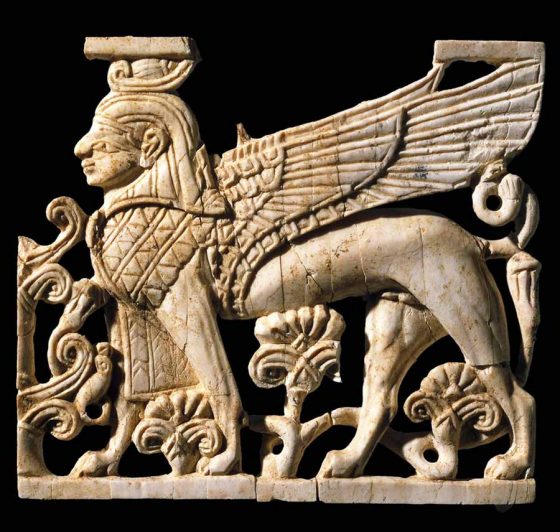
Much debate exists about the shape and nature of the Cherubs mentioned in the Bible.  They were featured on the ark, the tabernacle and the temple.  However, commentators and scholars have debated what they were, and with the findings made in time, we have a better picture of what they might have looked like.  The Talmud Sukkah 5b describes the cherubs as children, stating “What is the derivation of cherub?- R. Abbahu said, ‘Like a child’, for in Babylon they call a child Rabia.”  This interpretation has led to many artistic depictions of childlike cherubs.  However, this depiction is misleading and does not belong to the artistic world of the Bible and the ancient near east.  To find the correct meaning of the word we must look at the linguistic possibilities which exist. 

Hebrew In Israel | Vegetarians, Vegans and Torah – Learn Torah

Admin No Comments


For the past couple of months I have been friends with several vegetarians/vegans and have learnt a lot from them.  Some of these friends are also Torah practicing Jews who insist that the Torah/Judaism preaches their ideals.  This obviously developed into a discussion due to the fact that there is no such thing as this at all.

Children of Israel, Sons of Israel,

Hebrew In Israel | Gender Specification In Biblical Hebrew – Learn Torah

Admin No Comments

Unfortunately, people write very long posts on subjects which are more of a dictionary entry when written by an expert.  This is the case for this subject, which has been presented in a very obscure and incorrect way by quasi-Hebrew scholars.  I am not going to speak about anyone in particular, but I do want to set the record straight about one specific word.

Join My Group Bible Class TODAY!

The class is done in a virtual class room with multiple participants. We meet on Sundays at 11:45am US eastern, or 6:45pm Israel time. You do not need to know Hebrew for this class, and you also receive a recording of the classes every month. For the link and how to join, click the More Info Button to email us.