Abstract
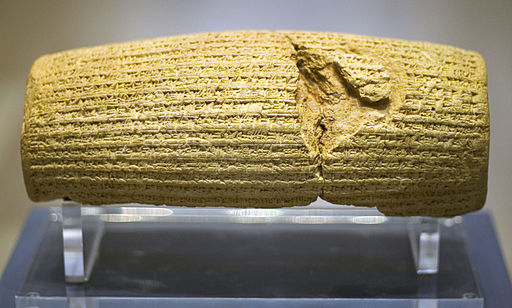
Ezra chapter one presents a striking proclamation attributed to Cyrus the Great, king of Persia, authorising the Jewish exiles to return to Jerusalem and rebuild the Temple of YHWH. This declaration, central to the narrative of the post-exilic return, raises significant historical and philological questions regarding its composition, ideological function, and relationship to external historical sources. This paper critically examines the portrayal of Cyrus in Ezra 1 against the backdrop of the Cyrus Cylinder, an authentic Achaemenid inscription. By analysing the language, theological framing, and historical context of both texts, this study argues that the Ezra declaration, while not a verbatim transcription of an imperial edict, represents a theologically oriented adaptation of a genuine Persian imperial policy. It highlights the nuanced interplay between Persian imperial pragmatism and Judean religious particularism, demonstrating how historical events were absorbed, localised, and reinterpreted within the sacred history of ancient Yehud.
Keywords: Cyrus Cylinder, Ezra, Achaemenid Empire, Second Temple Period, Historical Criticism, Literary Criticism, Persian Policy, Judean Identity.
Biblical History
Aug

Jul
1. Introduction: The Problem of Post-Destruction Ritual Memory and the Principle of Progressive Ritualization
The return from Babylonian exile presented the Yehudite community with complex theological and ritual challenges. Among these was the question of how to memorialize the destruction of Jerusalem and the First Temple. Zechariah 7–8 captures a pivotal moment in this transition, illustrating a principle of progression in ritual development: how localized, spontaneous mourning customs, initially emerging from the trauma of exile, gradually solidified into widespread, communal rites, eventually facing prophetic reinterpretation and institutionalization. The prophet Zechariah is approached to adjudicate the status of these fasts, and his response illuminates the inherent tension between ethical-religious priorities and the communal need for structured memory.
This period was defined by the Pax Persica, the relative peace and administrative stability imposed by the Achaemenid Persian Empire. While offering opportunities for rebuilding (including the Temple), Persian imperial policy often favored local religious autonomy within a framework of loyalty to the empire. This context meant that the Yehudite community, still under foreign dominion, had to navigate its religious identity and practices within these political realities, contributing to a desire for internal coherence and divine favor. Furthermore, the economic conditions of the post-exilic community were often challenging, marked by crop failures, drought, and a lack of resources (Haggai 1:6, 9-11). Such material hardships could exacerbate a community’s search for divine intervention, sometimes leading to an overemphasis on ritual performance as a means to alleviate suffering, a perspective Zechariah subtly critiques.
Methodological Note: Diachronic and Synchronic Readings
This analysis integrates both diachronic and synchronic approaches. It examines the historical development of the fasts and their context over time (diachronic), tracing their progression from ad hoc to established practices, while also analyzing Zechariah 7-8 as a coherent literary unit within the broader “Book of the Twelve” (synchronic). This dual perspective allows for a richer understanding of how the prophet addresses specific historical circumstances while also contributing to the larger theological message of the prophetic corpus, emphasizing the overarching theme of God’s sovereignty and Israel’s covenant destiny.
2. Zechariah 7: From Local Mourning to Ethical Reorientation
2.1. The Question of the Delegation (7:1–3)
The inquiry brought by the men of Bethel—”הַאֶבְכֶּה בַּחֹדֶשׁ הַחֲמִשִׁי הִנָּזֵר כַּאֲשֶׁר עָשִׂיתִי זֶה כַּמֶּה שָׁנִים” (Should I weep in the fifth month and abstain, as I have done for so many years?)—centers on whether the fast of the fifth month should continue. The fifth month (Av) was, and remains, associated with the destruction of the Temple (cf. 2 Kings 25:8–9). The use of the verb הִנָּזֵר (“to abstain” or “to separate oneself”) suggests more than mere fasting; it indicates a broader withdrawal, perhaps in mourning or as a form of dedication, echoing the concept of נזיר (Nazirite) in Leviticus 10:9 concerning priestly abstinence.
That the delegation comes from Bethel, a location historically associated with Northern Israelite worship (cf. 1 Kings 12:29), suggests a broader re-engagement of returning exiles with the Jerusalemite cult and highlights the pressing need to standardize or harmonize diverse mourning practices across the reintegrating community. This inquiry illustrates the early stage of ritual progression: what began as individual or localized responses to a catastrophic event (“as I have done for so many years”) was now being questioned for its communal and long-term validity within the re-established Yehudite state. This quest for standardization was likely spurred by the ongoing rebuilding efforts of the Second Temple, raising questions about the continued necessity of exile-era mourning rites now that a new sacred center was emerging.
2.2. Zechariah’s Response (7:4–14)
YHWH’s response, mediated through Zechariah, critiques the intent and authenticity of the fasts:
“When you fasted and mourned… did you really fast for Me, for Me?” (7:5)
The Hebrew reads צַמְתֻּנִי אֲנִי (tzamtuni ani). Grammatically, the verbal form צַמְתֻּנִי (you fasted, masculine plural) is directly affixed with the first-person singular direct object suffix -נִי (“for me” or “me”). The subsequent and explicit independent first-person singular pronoun אֲנִי (“I” or “Me”) serves as an intensive and emphatic reiteration of this direct object. This pleonastic construction creates a powerful double emphasis, underscoring the crucial question of motive and the intensely personal nature of YHWH’s inquiry. It highlights YHWH’s desire for genuine worship rooted in inner disposition, not merely outward performance. This theological emphasis on authenticity over outward show is a hallmark of prophetic critique and covenantal theology. These practices, though growing in observance, are depicted not as divinely ordained commandments but as human-initiated responses that, in their current form, may lack genuine ethical foundation.
The prophet then shifts the focus sharply from ritual observance to moral action (7:9–10), echoing earlier prophetic messages:
- “Execute true justice” (מִשְׁפַּט אֱמֶת שְׁפֹטוּ, “execute a judgment of truth”). The term אֱמֶת here is significant, implying a justice that is not merely legalistic but rooted in divine faithfulness and covenant fidelity, reflecting God’s own character.
- “and show steadfast love and compassion “(וְחֶסֶד וְרַחֲמִים).
- “Do not oppress the widow, orphan, foreigner, or poor” (וְאַלְמָנָה וְיָתוֹם גֵּר וְעָנִי אַל תַּעֲשֹׁקוּ).
This language closely parallels Isaiah 58, which similarly critiques fasting devoid of righteousness and social justice: “Is this the fast I choose? To bow one’s head like a reed?” (Isa 58:5–7). Beyond Isaiah, this ethical call resonates deeply with Deuteronomic legislation and earlier prophetic voices (e.g., Amos 5:24; Micah 6:8), demonstrating Zechariah’s role in synthesizing and reinterpreting these foundational traditions for the post-exilic community. His message implicitly challenges the notion that religious ritual alone, divorced from social justice, can guarantee divine favor or alleviate communal hardship. Furthermore, this critique echoes Jeremiah’s “Temple Sermon” (Jeremiah 7), which similarly warns against reliance on the mere presence of the Temple while neglecting ethical living.
3. Zechariah 8: Reframing Fasts in Light of Redemption – The Culmination of Progression
By the time we reach Zechariah 8, the tone shifts considerably. While chapter 7 questions the spiritual legitimacy of fasting, chapter 8 masterfully reframes these very fasts within a redemptive eschatological vision. This dramatic shift underscores the dynamic nature of prophetic discourse, which can move from sharp critique to hopeful re-envisioning based on divine promise. Critically, this chapter reveals the culmination of the ritual progression: these once-local and spontaneous mourning practices have become sufficiently widespread and ingrained that they cannot simply be abolished. Instead, the prophetic voice recognizes their deeply embedded nature and seeks to transform their meaning.
3.1. The Four Fast Days (8:18–19)
Zechariah 8:19 explicitly names four fasts:
- The fast of the fourth month — linked to the breaching of Jerusalem’s walls (Jer 52:6).
- The fast of the fifth month — commemorating the destruction of the Temple (2 Kgs 25:8–9).
- The fast of the seventh month — associated with the assassination of Gedaliah (Jer 41).
- The fast of the tenth month — marking the beginning of the siege of Jerusalem (2 Kgs 25:1).
These correspond to critical markers of historical trauma. However, instead of abolishing them, the prophet proclaims their radical transformation:
“These shall become for the house of Judah days of joy and gladness and cheerful feasts and truth and peace you shall love” (יִהְיֶה לְבֵית יְהוּדָה לְשָׂשׂוֹן וּלְשִׂמְחָה וּלְמֹעֲדִים טוֹבִים וְהָאֱמֶת וְהַשָּׁלוֹם אֱהָבוּ.)
Here, prophecy demonstrates its capacity to accommodate and guide liturgical development, reassigning profound theological meaning to existing practices rather than rejecting them outright. This shift explicitly reflects the institutional momentum behind these fasts—they had evidently become deeply embedded in public consciousness and communal identity across Yehud. The prophetic response thus evolves from a posture of critique to one of profound reinterpretation and re-sanctification, aligning the future of these rituals with YHWH’s promised restoration and emphasizing the authority by which Zechariah can announce such a dramatic reorientation.
4. Philological Note: Fasting and Mourning Terminology Reflecting Progression
The Hebrew verbs and nouns used across these chapters are particularly telling, indirectly highlighting the progression from spontaneous grief to structured ritual:
- צוּם (“to fast”) – The general and most common term for ritual abstention from food, suggesting a formalized practice.
- בָּכָה (“to weep”) – Implies emotional mourning, whether personal or communal, often accompanying fasting, hinting at the raw grief that gave rise to the practices.
- הִנָּזֵר (from the root N-Z-R) – As noted, this suggests a broader ritual abstention or separation, potentially encompassing more than just food (cf. Naziriteship, where vows involve abstention from wine, cutting hair, etc.). Its usage here indicates a dedicated withdrawal for a specific purpose, highlighting the deliberate, even formalized, nature of these mourning practices as they developed.
- אֵבֶל (“mourning”) – While not directly used in Zechariah 7–8 to describe the fasts themselves, this noun appears in similar contexts (e.g., Zech 12:10, where “mourning” is connected to future lamentation over the pierced one). Its conceptual presence underscores that the fasts are fundamentally acts of mourning, embodying deep communal grief and memory.
This range of terms highlights that the issue addressed by Zechariah is not merely about fasting as a technical act, but about emotional and social memory—the collective processing of trauma ritualized through various forms of abstention and lament. This also shows an awareness of “wisdom” literature’s emphasis on righteous living as a path to blessing, aligning the ethical demands with the promised future joy.
5. Reception and Liturgical Institutionalization – The Enduring Progression
5.1. Second Temple and Qumran Evidence
By the late Second Temple period, the progression of these fasts from ad hoc observances to formally recognized communal practices was complete, as evidenced by their entrenched status within Jewish religious life. The Megillat Taʿanit (1st century CE), a significant historical document, not only lists fasts and days of mourning but also enumerates days when fasting is prohibited. This demonstrates the increasing codification and regulation of the Jewish calendar, often reflecting diverse communal practices and occasional disputes regarding appropriate responses to historical events.
Regarding Qumran: While fasting was certainly a practice within the Qumran community, often tied to their distinct sectarian calendar and emphasis on purity and atonement, direct textual evidence for the observance of these specific four fasts (of the 4th, 5th, 7th, and 10th months) among the Dead Sea Scrolls is lacking. The community’s unique calendar and theological focus meant their liturgical practices often diverged from those developing in Jerusalemite Judaism. Therefore, while shared concerns with mourning, judgment, and divine restoration can be found in Qumran literature, a direct link to Zechariah 8:19’s fasts cannot be definitively established based on current evidence.
5.2. Rabbinic Codification
In Mishnah Taʿanit 4:6–7, the fasts of the fourth, fifth, seventh, and tenth months are formally codified as commemorations of national tragedies, underscoring their enduring significance. The Babylonian Talmud (b. Rosh Hashanah 18b) directly references Zechariah 8:19 and expands upon the conditional nature of these fasts:
“When there is peace—they shall be joy and gladness; when there is persecution—they shall be fasts.”
This rabbinic interpretation precisely captures the prophetic trajectory articulated in Zechariah: the fasts are actual observances, but their emotional and spiritual tenor is directly dependent on the prevailing historical context and the state of the nation. This flexible interpretation is a testament to the dynamic progression of these rituals, allowing them to adapt to changing historical circumstances while retaining their core meaning. It encapsulates the profound truth that mourning can indeed turn into rejoicing.
Broader Reception and Modern Observance
Beyond the rabbinic period, Zechariah’s prophecy has resonated in various ways. In early Christian interpretation, the ethical demands of Zechariah 7 often align with Jesus’ critiques of hypocrisy, while the eschatological promises of Zechariah 8 contribute to the broader messianic expectation. While the literal transformation of fasts into feasts is specific to Jewish tradition, the underlying principle of divine redemption bringing joy out of sorrow holds universal appeal. In contemporary Jewish practice, these fasts (Shivah Asar B’Tammuz, Tisha B’Av, Tzom Gedaliah, and Asara B’Tevet) continue to be observed, though often with a renewed emphasis on the prophetic call for social justice (tikkun olam, “repairing the world”) alongside communal memory, embodying the ongoing dynamic between ritual and ethics. This demonstrates the long-term progression and adaptability of these practices across millennia.
6. Conclusion: Prophecy and Ritual Memory in Dialogue – A Model of Progression
Zechariah 7–8 profoundly reveals how prophecy both critiques and dynamically adapts to communal religious development. What begins as spontaneous mourning practices in response to catastrophic trauma gradually becomes institutionalized. Zechariah’s prophecy reflects this complex trajectory of progression:
- Initial individual/localized responses to trauma.
- The gradual spread and recognition of these practices (implicit in the Bethel delegation’s question).
- Prophetic critique of their internal motivation when widespread.
- Transformation and re-sanctification of these now-entrenched fasts into symbols of future joy.
The ethical priority of prophets like Isaiah and Zechariah is unequivocally clear: ritual without righteousness is an empty gesture. However, equally clear is the reality that people need ritual frameworks to process national trauma, maintain collective memory, and express communal identity. The prophetic voice thus evolves—not to reject established tradition outright, but to shape and infuse its theological meaning in light of divine promises of redemption and covenant renewal. This dynamic interplay ensures both continuity and spiritual vitality within the unfolding religious life of the community, serving as a compelling model for understanding the progression of ritual memory.
Bibliography (Select)
- Blenkinsopp, Joseph. Judaism, the First Phase: The Place of Ezra and Nehemiah in the Origins of Judaism. Eerdmans, 2009.
- Boda, Mark J. The Book of Zechariah. New International Commentary on the Old Testament. Grand Rapids: Eerdmans, 2016.
- Carroll, Robert P. Jeremiah: A Commentary. Old Testament Library. SCM Press, 1986.
- Coggins, R. J., and J. L. Houlden. The Books of Haggai, Zechariah and Malachi. Cambridge Bible Commentary on the New English Bible. Cambridge: Cambridge University Press, 1969.
- Fishbane, Michael. Biblical Interpretation in Ancient Israel. Oxford University Press, 1985.
- Floyd, Michael H. Minor Prophets, Part 2. Forms of the Old Testament Literature, vol. 22. Grand Rapids: Eerdmans, 2000.
- Koch, Klaus. The Prophets: The Babylonian and Persian Periods. Fortress Press, 1983.
- Petersen, David L. Haggai and Zechariah 1–8. The Old Testament Library. Westminster John Knox Press, 1984.

Oct
Some scholars have speculated that the waving of the four species during Sukkot, as practiced in Rabbinic Judaism, may have its origins in a fertility ritual. This interpretation is based on the association of agricultural festivals in the ancient Near East with fertility, where symbolic acts like waving branches or plants were believed to ensure good harvests. Such rituals often involved invoking blessings on the land and crops, reflecting a deep connection between human action and divine influence on agricultural productivity.

Aug
An examination of the relationship of the New moon and Shabbat in Biblical Times
“Is the New moon day a Shabbat?” has been a discussion in Torah observant groups for many years. The common argument is that the day of the new moon is the starter of a cycle of seven days, where the seventh or eighth day is a day of rest. In this article, I will examine the use of Amos 8:5 in the claim, and look into historical evidence on the matter.[1]

Apr
Subscribe: Apple Podcasts | RSS
“Then Hizkiyahu sent to all Isra’el and Y’hudah, and wrote letters also to Efrayim and M’nasheh, summoning them to the house of YHWH in Yerushalayim, to keep the Pesach to YHWH the God of Isra’el.”
2 Chronicles 30:1
From our weekly bible class, we look at how converts have been handled at different times, and how King Hizkiyahu’s passover is a defining point in the history of identity.

Apr
Subscribe: Apple Podcasts | RSS
Yoel explains the practical logistics of this component of the feasts and calendar based on the Aviv Search of 2019. This teaching was presented to our Weekly Bible Class group.

Oct
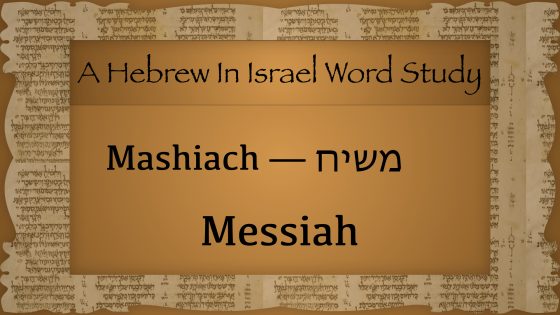
The word משיח-Mashiach-Messiah is derived from the root משח which is mostly associated with the idea of placing oil on something or someone. The act of anointing was performed as an act of dedication of a person or an item to a service (mostly to God). In this article, I will be looking into the background of this act, and the meaning of the title Mashiach.

Oct
Subscribe: Apple Podcasts | RSS
In this short podcast, we look closer at some of the interpretations of what Cham did to Noach and the sources of these interpretations.

Aug
One of the basic stipulations of any covenant in the world is the principle of trust and loyalty between the two or more parties. Many books and papers have been written on the subject of covenants and treaties, but in this short paper I will examine one of the most important words used in covenant language–Love.
Join My Group Bible Class TODAY!
The class is done in a virtual class room with multiple participants. We meet on Sundays at 11:45am US eastern, or 6:45pm Israel time. You do not need to know Hebrew for this class, and you also receive a recording of the classes every month. For the link and how to join, click the More Info Button to email us.
