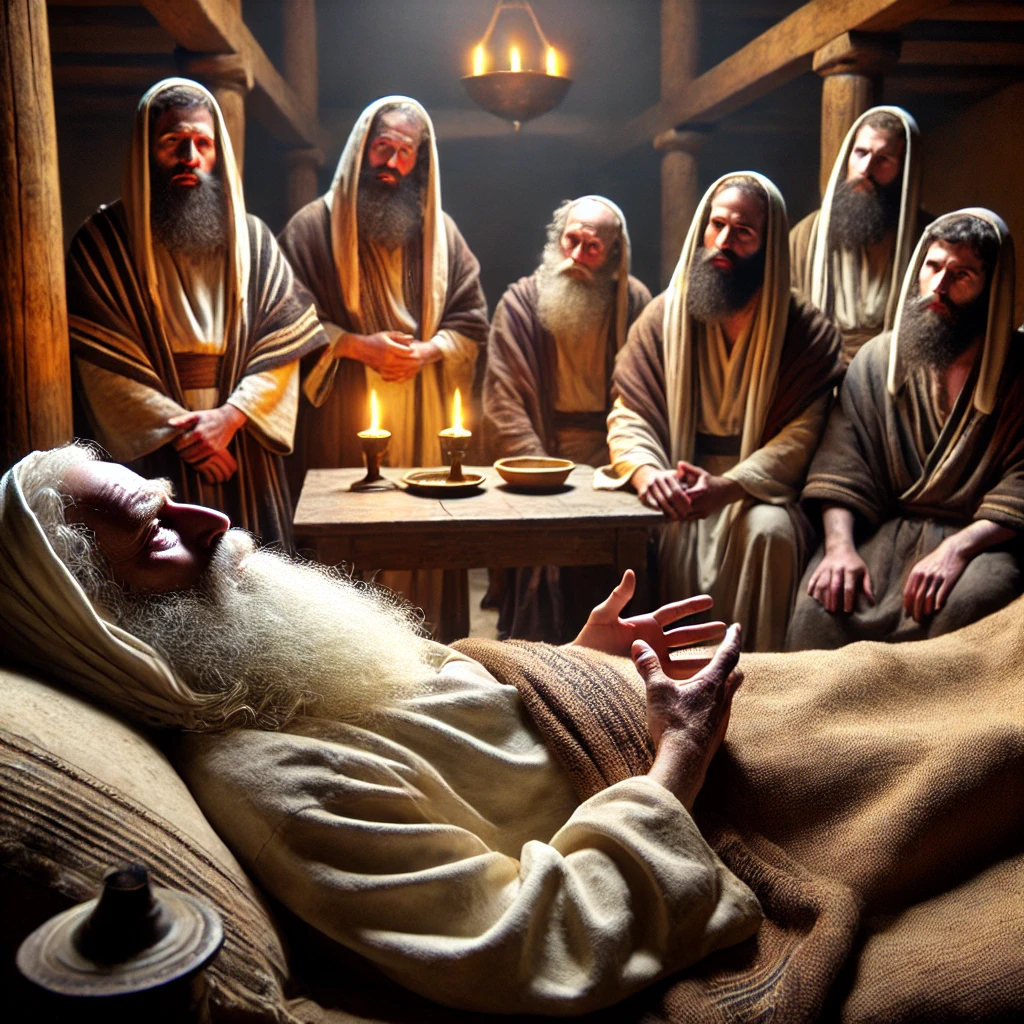
Historiography is the study and writing of history, often shaped by the context, perspective, and purposes of the author. In ancient times, historiography was not just about recording facts but about interpreting events to serve ideological, political, or theological agendas. Writers often used storytelling techniques, historical precedents, and symbolic references to shape their audience’s understanding of the past and inspire action in the present.
In the case of 1 Maccabees, the author employs historiography to legitimize the Hasmonean revolt against the Seleucid Empire and to portray the Hasmoneans as God’s chosen leaders, defending the Torah and the Jewish way of life against Hellenistic encroachment. The speech of Matityahu in 1 Maccabees 2:49–70 exemplifies this approach, blending historical interpretation with Biblical allusions to craft a powerful and persuasive narrative.
The Speech of Matityahu: Historiographical and Propagandistic Aims
Matityahu’s speech serves as a rallying cry to the Jewish people, urging them to resist Hellenistic influence and fight for their covenantal obligations. It does so by invoking Biblical figures and themes, aligning the Hasmonean struggle with Israel’s sacred history. This historiographical method reinforces the Hasmoneans’ legitimacy and inspires collective resistance.
The speech of Matityahu (Mattathias) in 1 Maccabees 2 serves both a historiographical and a propaganda function, aimed at legitimizing the Hasmonean rebellion against the Seleucid Empire and presenting their cause as divinely sanctioned.
1. Historiographical Function
The author of 1 Maccabees seeks to present Matityahu’s speech as a rallying cry rooted in Jewish history, tradition, and identity. The speech highlights a few central elements:
- Continuity with Biblical heroes: Matityahu calls upon the memory of Abraham, Phinehas, and others who acted zealously for God, casting the Hasmoneans as heirs to this tradition.
- Theological framing: The rebellion is framed not merely as a political struggle but as a religious duty to uphold the Torah and resist Hellenistic idolatry.
- Martyrdom and covenant loyalty: By calling for steadfastness to the covenant, Matityahu invokes the idea of faithfulness even unto death, placing the Hasmonean struggle in the broader narrative of Israel’s covenantal history.
2. Propaganda Function
The speech has a clear propagandistic tone designed to:
- Legitimize the rebellion: By drawing parallels between their cause and the righteous actions of Biblical figures, the Hasmoneans are portrayed as defenders of true Judaism.
- Unify and inspire resistance: The appeal to fight for the Torah and the covenant seeks to rally Jews across factions to join the rebellion.
- Claim divine support: By positioning their struggle within the framework of Biblical precedent, the speech suggests that God is on their side, implicitly guaranteeing their eventual victory.
Biblical Allusions in Matityahu’s Speech
- The Zeal of Phinehas (Numbers 25:6–13)
Matityahu explicitly references Phinehas, the grandson of Aaron, who acted zealously by killing an Israelite man and a Midianite woman engaged in idolatrous practices. This act, which earned Phinehas a covenant of peace, is used to frame Matityahu’s own actions—killing a Hellenistic Jew offering a pagan sacrifice—as a righteous and divinely sanctioned act. The parallel suggests that zeal for God is necessary to preserve Israel’s covenant. - Abraham’s Obedience (Genesis 22:1–19)
Abraham’s willingness to sacrifice Isaac is mentioned to highlight total submission to God’s will. By aligning himself with Abraham, Matityahu emphasizes that the Hasmoneans, like the patriarch, are willing to risk everything for the sake of divine obedience. - Elijah’s Confrontation with Baal (1 Kings 18–19)
Elijah’s zeal against idolatry during his contest with the prophets of Baal at Mount Carmel mirrors Matityahu’s call to reject Hellenistic worship. Elijah’s lone stand for God’s truth becomes a template for the Hasmonean resistance against overwhelming odds. - The Deeds of Joshua (Joshua 1–6)
Matityahu’s speech invokes the spirit of Joshua, who led the Israelites in conquering the Promised Land and faithfully upheld the Torah. The mention of Joshua connects the Hasmonean military campaign with the conquest of Canaan, portraying it as another stage in Israel’s divine mission. - Hananiah, Mishael, and Azariah (Daniel 3)
Though not directly quoted, the speech resonates with the story of these three men who refused to bow to Nebuchadnezzar’s golden image and were thrown into the fiery furnace. Their defiance and miraculous deliverance reinforce the idea that faithfulness to God will ultimately triumph over foreign oppression. - David’s Zeal (1 Samuel 17)
David’s defeat of Goliath with faith and courage is implied in the call to confront the Seleucid forces despite their numerical and military superiority. Matityahu’s speech suggests that just as David’s victory was a testament to God’s power, so too will God ensure the Hasmoneans’ success. - The Blessings and Curses of Deuteronomy (Deuteronomy 28)
Matityahu’s call to remain faithful to the covenant echoes the blessings for obedience and curses for disobedience outlined in Deuteronomy. The implicit message is that resisting Hellenistic practices will bring divine blessing, while compromise will lead to ruin. - The Choice Between Life and Death (Deuteronomy 30:15–20)
The language of choice—life through obedience to God versus death through rebellion—permeates Matityahu’s rhetoric. This reflects Moses’ exhortation to Israel to “choose life,” positioning the Hasmonean struggle as a choice for covenantal life. - The Suffering of the Faithful in Psalm 44
Psalm 44, a communal lament about suffering despite covenantal faithfulness, may underlie Matityahu’s call to persevere in the face of persecution. It suggests that remaining steadfast, even in suffering, is an act of faith that God will ultimately reward. - The Song of Deborah (Judges 5)
Deborah’s call to action against the Canaanites serves as a literary parallel. Just as Deborah rallied the tribes of Israel, Matityahu’s speech inspires collective action against the Seleucids. The historical echoes of divine deliverance in Deborah’s time reinforce hope for victory.
Matityahu’s Death and Its Biblical Parallels
Matityahu’s death is depicted in 1 Maccabees 2:70 with remarkable parallels to the deaths of Biblical heroes, enhancing his role as a foundational figure in the Hasmonean narrative. The text states that “all of Israel mourned him,” echoing the communal mourning seen for figures like Moses (Deuteronomy 34:8), Aaron (Numbers 20:29), and Samuel (1 Samuel 25:1). This portrayal elevates Matityahu’s status, aligning him with the great leaders of Israel who guided the nation during times of crisis.
- The Role of Communal Mourning
Communal mourning in the Bible often signifies the end of an era and the loss of a divinely chosen leader. By describing all of Israel as mourning Matityahu, the text underscores his importance as a unifying figure and the spiritual leader of the Hasmonean revolt. This also signals the transition of leadership to his sons, particularly Judas Maccabeus, who will continue the struggle. - Comparison with Moses and Joshua
Like Moses, who led Israel out of Egypt but did not enter the Promised Land, Matityahu initiates the revolt but does not live to see its ultimate success. His death mirrors the pattern of leadership succession seen in Joshua’s rise after Moses, as Juda the Maccabee assumes command after Matityahu. - Davidic Echoes
The mourning for Matityahu also evokes the laments for Davidic kings like Saul and Jonathan (2 Samuel 1:17–27). This connection subtly aligns the Hasmoneans with the Davidic tradition, reinforcing their legitimacy as divinely chosen leaders in a time of crisis. - Theological Implications
Matityahu’s death is not merely a historical note but a theological statement. It frames the Hasmonean revolt within the context of divine providence, suggesting that just as God raised up leaders in the past, He continues to guide Israel through the Hasmoneans. The communal mourning reflects a collective acknowledgment of this divine plan and the passing of a leader who faithfully carried out God’s will.
Conclusion
Matityahu’s speech in 1 Maccabees 2 is a masterful piece of historiographical writing that draws on Biblical narratives to justify and inspire the Hasmonean revolt. By invoking figures like Abraham, Phinehas, and Elijah, and alluding to themes from the Torah and the Prophets, the author places the Hasmonean struggle within the continuum of Israel’s sacred history. This blending of historiography and propaganda legitimizes the Hasmonean cause, encourages resistance to Hellenistic oppression, and strengthens the Hasmoneans’ claim to leadership over the Jewish people. Furthermore, Matityahu’s death and the communal mourning it inspires underscore his role as a divinely chosen leader, linking his legacy to the great figures of Israel’s past and setting the stage for the continued success of the revolt under his sons.
Suggested Reading
- Collins, John J. Between Athens and Jerusalem: Jewish Identity in the Hellenistic Diaspora. Grand Rapids: Eerdmans, 2000.
- Grabbe, Lester L. An Introduction to First Century Judaism: Jewish Religion and History in the Second Temple Period. London: T&T Clark, 1996.
- Goldstein, Jonathan A. I Maccabees. Anchor Bible Commentary. Garden City: Doubleday, 1976.
- Schiffman, Lawrence H. From Text to Tradition: A History of Second Temple and Rabbinic Judaism. Hoboken: Ktav, 1991.
- Tcherikover, Victor. Hellenistic Civilization and the Jews. Philadelphia: Jewish Publication Society, 1959.
- VanderKam, James C. An Introduction to Early Judaism. Grand Rapids: Eerdmans, 2001.
