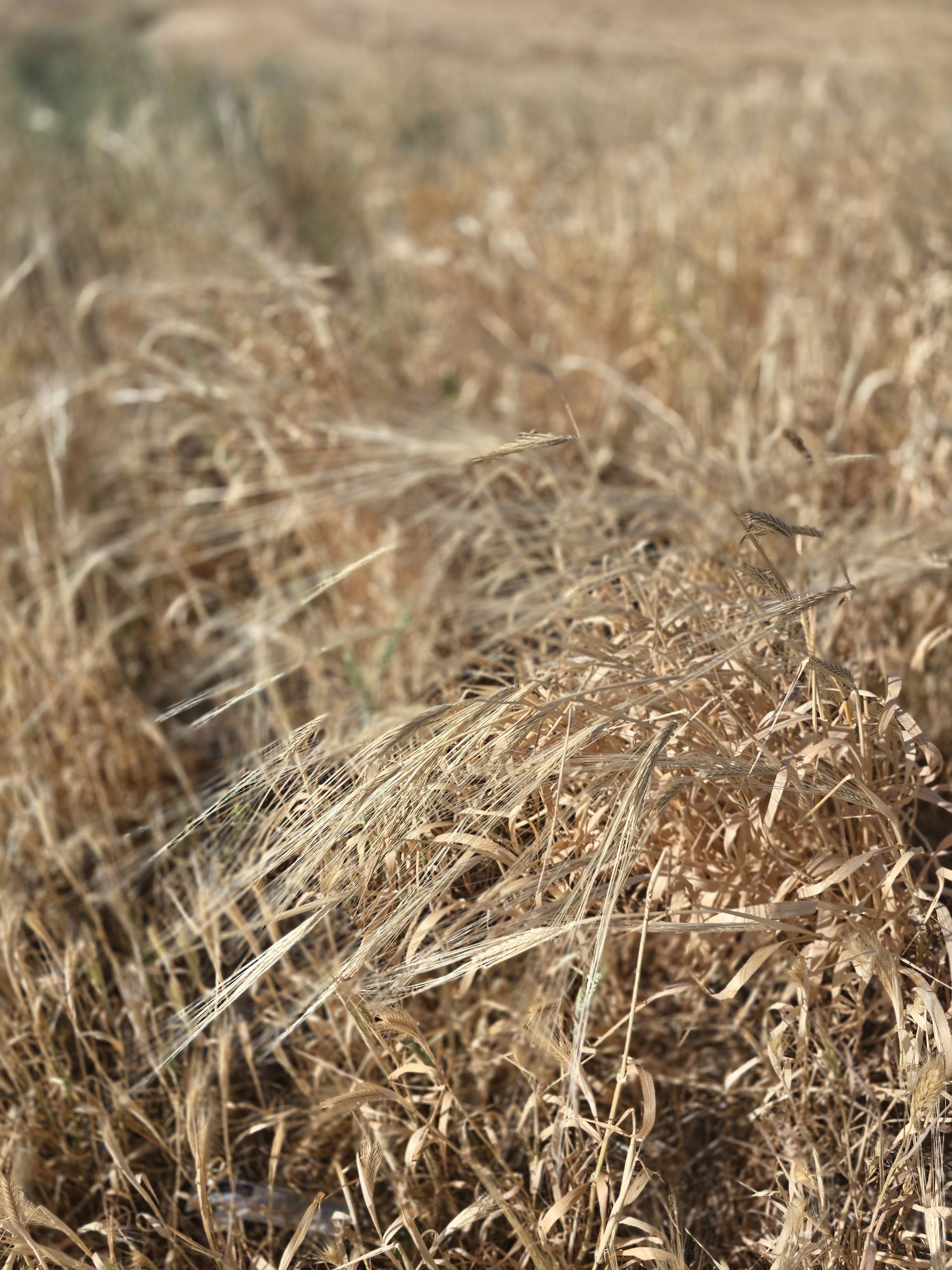
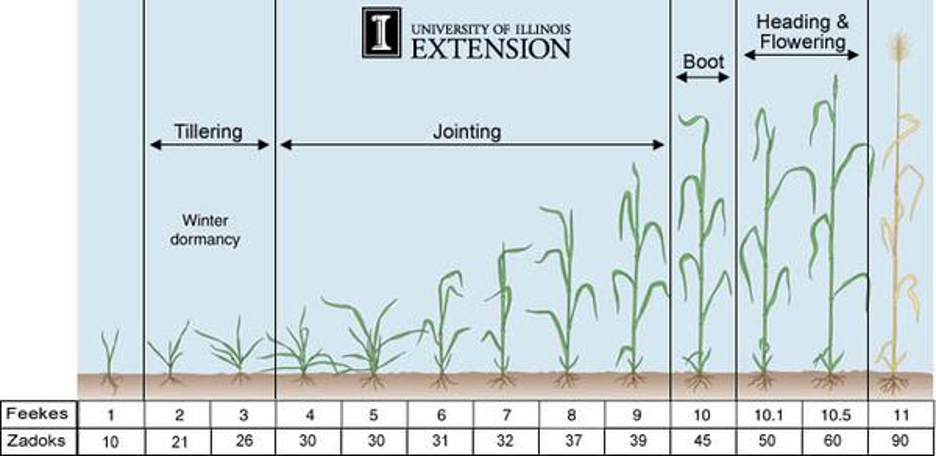
Definitions related to barley development observations according to the following:
Stages of Growth after Heading
Flowering
Milk
Soft Dough
___________________________________
First Edible Stage for Humans
Aviv Stage (אָבִיב) – Filled with Starch/Firm, can be parched in fire
Karmel Stage (כַּרְמֶל)?
–
Harvest Ready – Kernal Hard (not dividable with thumbnail)
Shattered – After drying out the barley heads shatter and fall apart, self seeding on the ground, [Note: Only occurs with wild barley (Hordeum spontaneum)]
Notes:
- Primary remarks are based on observations of wild barley (Hordeum spontaneum). Modern agricultural barley (Hordeum vulgare – two and six row) and wheat fields were also checked and compared.
- A detailed but schematic description of the route followed for observing barley development is included for the sake of transparency so that everyone can understand the evidence more clearly.
If this information is used for conducting independent barley observations, please respect others by being careful not to destroy the evidence that other groups may want to inspect after you.
Following are some notes regarding the state of barley growth in Israel from two recent trips:
Trip to the northern Negev on Friday March 28, 2025 (Adar 28, 5785).
Warm weather mostly overcast sky (at 10:30 28°C; 27% humidity)
Overview of Route:
Travelled west and then south from Jerusalem following Highways 1, 3 and 4 to Gaza, continuing SE on the Road 34 towards Beersheva and returning toward Gaza on Road 25. Turned south on Road 232 to Hanion Reim then continued to Tel Gamma followed by the Road 242 jct (checked fields on east and west sides in the area including along the Nahal Besor). Areas north and south of the Reim Jct were checked. We returned via the same route except we continued north on Hwy 3 through Modiin to highway 443 and up to the Jerusalem area.
Observations:
Note this has been a very dry winter with sporadic precipitation separated by long dry spells, in addition, there has been significant periods of cold weather in the single digits. In February it was being reported that this was one of the driest years in the past century (https://www.timesofisrael.com/water-authority-says-israel-experiencing-driest-winter-in-a-century/).
Note on the days before our trip, patches of wild aviv barley where observed in random choice locations during inspections around the Tel Aviv area. Random single stalks of wild aviv barley among less advanced barley noticed in inspections around the Jerusalem area.
Annual precipitation in the area around Gaza so far 132mm, % of normal to date 66, % of annual average 61% based on measurements in Besor Farm. [https://www.accuweather.com/en/ps/gaza/258096/march-weather/258096?year=2024] [https://ims.gov.il/en/AccumulatedRain]
Jerusalem Centre. (Annual precipitation in the area so far 255mm, % of normal to date 52, % of annual average 49%)
Tel Aviv Coast . (Annual precipitation in the area so far 258mm, % of normal to date 53, % of annual average 51%)
Traveling West and then South from Jerusalem along Highways 1, 3 and 4 to Mordekhai Jct. – Considerable amounts of headed wild barley were regularly seen while driving along Highways 3 and 4 including frequent patches of golden color barley that appeared to be either aviv stage or even past the aviv stage.
Mordekhai Jct. – the majority of the wild barley observed was in the soft dough stage with random aviv mixed in. Sporadic patches of wild aviv and barley past the aviv stage were observed in choice locations. It appeared that within a few days of warm weather there will be significant fields that will be predominantly aviv. The area had been partially grazed by sheep. Agricultural wheat fields were in the soft dough stage.
Along the route from Mordekhai Jct to Reim Park:
Road 34 to Road 25, Road 25 to Road 232, Road 232 to Reim Park – considerable amounts of wild headed barley seen including frequent patches of golden color barley that appeared to be either aviv stage or even past the aviv stage.
Reim Park (West of Road 232) –wild barley was mainly found in the dough stage with individual aviv mixed in.
Tel Gamma – The entire Tel and surrounding area were heavily grazed over. The wild barley was mainly short and far less advanced than what was seen in the previous locations. In a few areas with taller barley, it was found to be mainly in the soft dough stage.
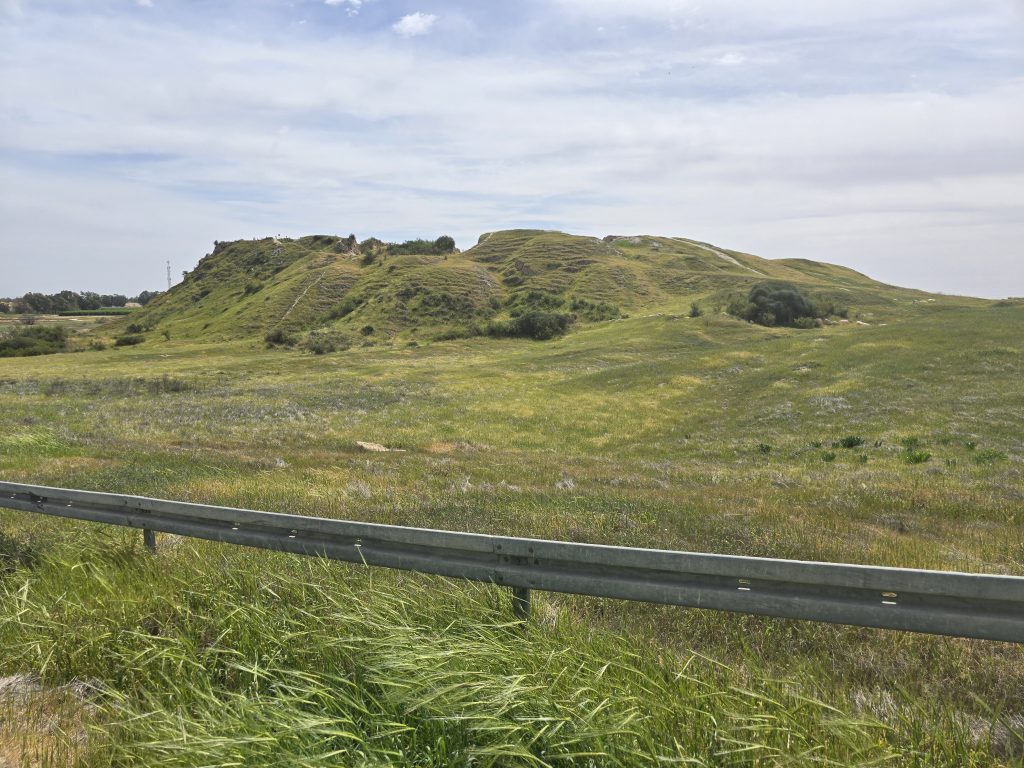
242 Jct (West of Road 232) – Grazed, Same as Tel Gamma.
Reim Jct (East of Road 232 and East of Nahal Besor) – Grazed, Same as Tel Gamma.
Reim Jct (East of Road 232 and West of Nahal Besor) – Grazed, Same as Tel Gamma.
North of Reim Jct (East of Road 232) Many patches of wild mixed dough and aviv stage barley were inspected or observed. This is all expected to be predominantly aviv within a few days.
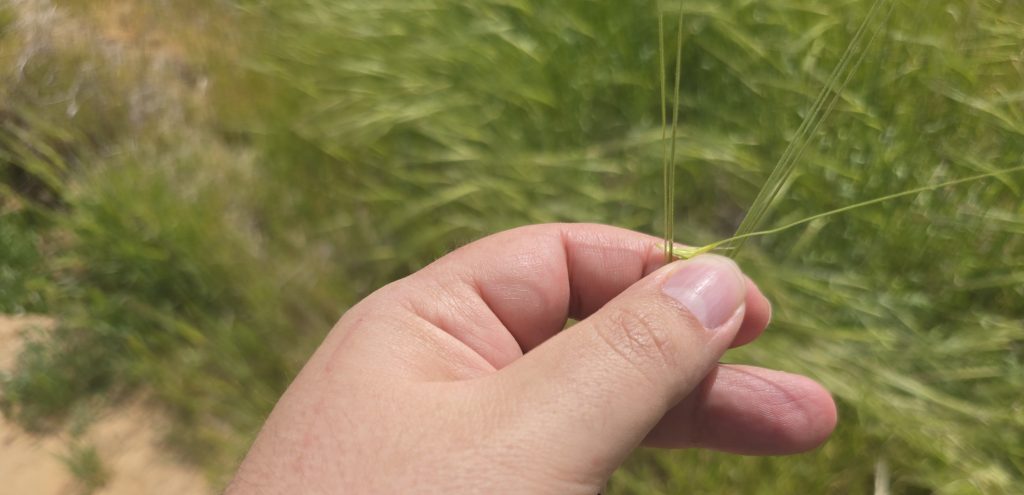
Trip to the Jordan Valley on Sunday March 30, 2025 (Nisan 1, 5785).
Nice warm weather in the morning with clear sky became partially cloudy before noon and there were even a few sprinkles when travelling through the Jezreel. Valley. (at 9:20 in the Jordan Valley 20°C; 61% humidity)
Overview of Route:
Travelled east from Jerusalem and Pisgat Zeev to Jericho following road 437 to Highway 1 and then to Hwy 90. Travelled along Highway 90 north with stops north of Jericho at a pump station, Wadi Qaud Ida, Northwest of Beit She’an-Bardala Checkpoint and then west along Highway 71near the Beit Shean train station, Road 675 to Tel Jezreel and then returned via Highways 65, 66, and 6 along the coastal plain.
Observations:
(Annual precipitation so far this year 158mm, % of normal to date: 63%, % of yearly average 57% based on measurements at Sede Eliyyahu)
Travelling east from Jerusalem along Road 437 through Hizma Jct and then to Hwy 1 and descending to Jericho – although there is green vegetation including grasses on the hills and along the roads, nearly all of it has been grazed close to the ground by the bedouin animals. The green vegetation becomes completely brown while descending to Jericho.
Jericho Area to several kilometers north of Jericho along Highways 1 and 90 – No agricultural tracts of grains were being grown of any sort and there was nearly no wild barley seen at all. One very small patch of wild barley was found directly by the highway about 10 km north of Jericho with erect heads and kernels in the soft dough stage.
Much further north East of Highway 90 (km343) – The vegetation around this structure was low, yellowish in color and appeared to have been grazed over.
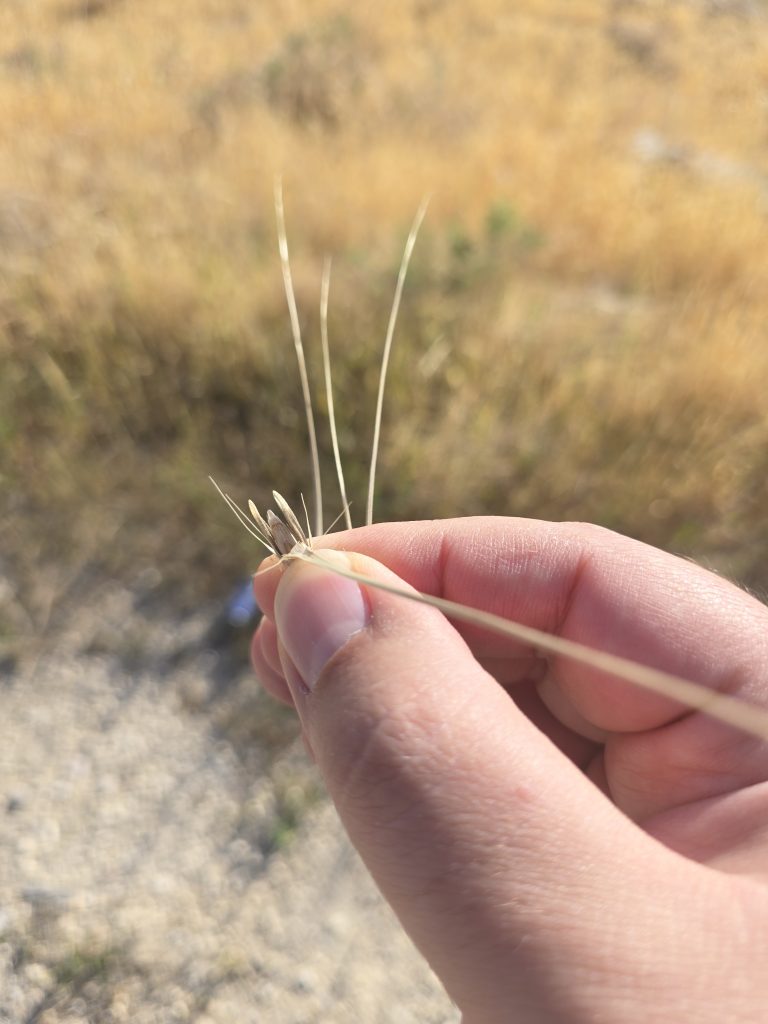
Pump house east of Highway 90 (km344) – The large mixed wild barley patches here were found to be mostly past the aviv stage and were largely shattered. There were also significant amounts of erect barley which upon inspection revealed small poorly formed grain kernels or none at all. This area may have been partially grazed over earlier in the year.
Wadi/Nahal Firan (Memorial East of Hwy 90) – not checked
Wadi Qaud Ida (Nahal Talkid) (km 350) west of highway 90 – The wild mixed barley patches here were found to be mostly past the aviv stage and were largely shattered. There were also significant amounts of erect barley which upon inspection revealed small poorly formed grain kernels or none at all.
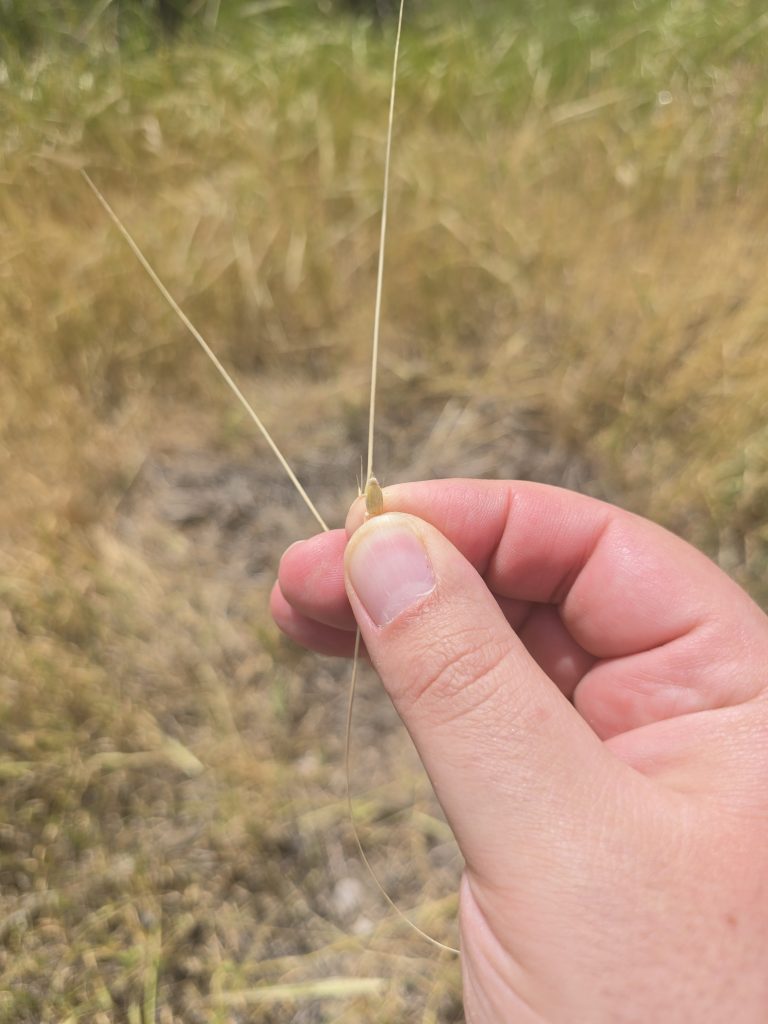
Northwest of Beit She’an-Bardala Checkpoint – Wild barley, olunteer barley and wheat along the margin of an already harvested wheat field was inspected and were found to be mostly past the aviv stage There was also significant amounts of erect barley which had small poorly formed grain kernels or none at all.
Near Beit She’an Railway Station – The mixed wild barley patches here were found to be mostly past the aviv stage and were largely shattered. There was also significant amounts of erect barley which upon inspection revealed small poorly formed grain kernels or none at all.
Conclusion
This has been a very dry and untypical year weatherwise and our observations reflect this situation. In most of Israel, nature is simply a bit off. Presently, there are numerous small patches of wild barley that are in the aviv stage of development (or even past this stage and have shattered). These patches of aviv have been found in numerous locations from the northern Negev around the Gaza area through the entire coastal plain at least to the Tel Aviv area on the western portion of the country as well as in warmer portions of the Jordan Valley.
It is expected that within the next few days, there will be significant amounts of wild Aviv barley in the warmer areas of Israel, including sizeable continuous plots.
