1. Introduction
Among the most distinctive features of the Yachad community, often associated with the Essenes, are their unique calendrical system and their interpretation of biblical festivals. This paper focuses on their understanding of Shavuot, or the Feast of Weeks, arguing that this festival held a significance far beyond its agricultural roots. For the Qumran sect, Shavuot was intrinsically linked to the concept of oaths and the annual renewal of the covenant. This reinterpretation underscores the community’s rigorous adherence to their understanding of divine law and their commitment to a disciplined and covenantal life.
2. Methodological Considerations for Textual Analysis
The study of Shavuot in the Dead Sea Scrolls requires careful attention to the nuances of the texts. While no scroll explicitly bears the title “Shavuot and Oaths,” the connection is inferred through thematic analysis, calendrical correlation, and comparative study with related literature. The interpretation relies on:
- Calendrical Association: The community’s fixed solar calendar provides a consistent date for Shavuot, making it a suitable annual anchor for a significant ceremony.
- Thematic Resonance: The language of covenant, oath-taking, and purity found in texts like 1QS aligns strongly with the traditional understanding of Shavuot as commemorating the giving of the Torah.
- Cross-Textual Evidence: The widespread presence and influence of texts like Jubilees within the Qumran corpus reinforce the theological foundations for this interpretation.
3. The Yachad Perspective on Shavuot: A Time of Oaths and Covenant Renewal
3.1. The Annual Covenant Renewal Ceremony in the Community Rule (1QS)
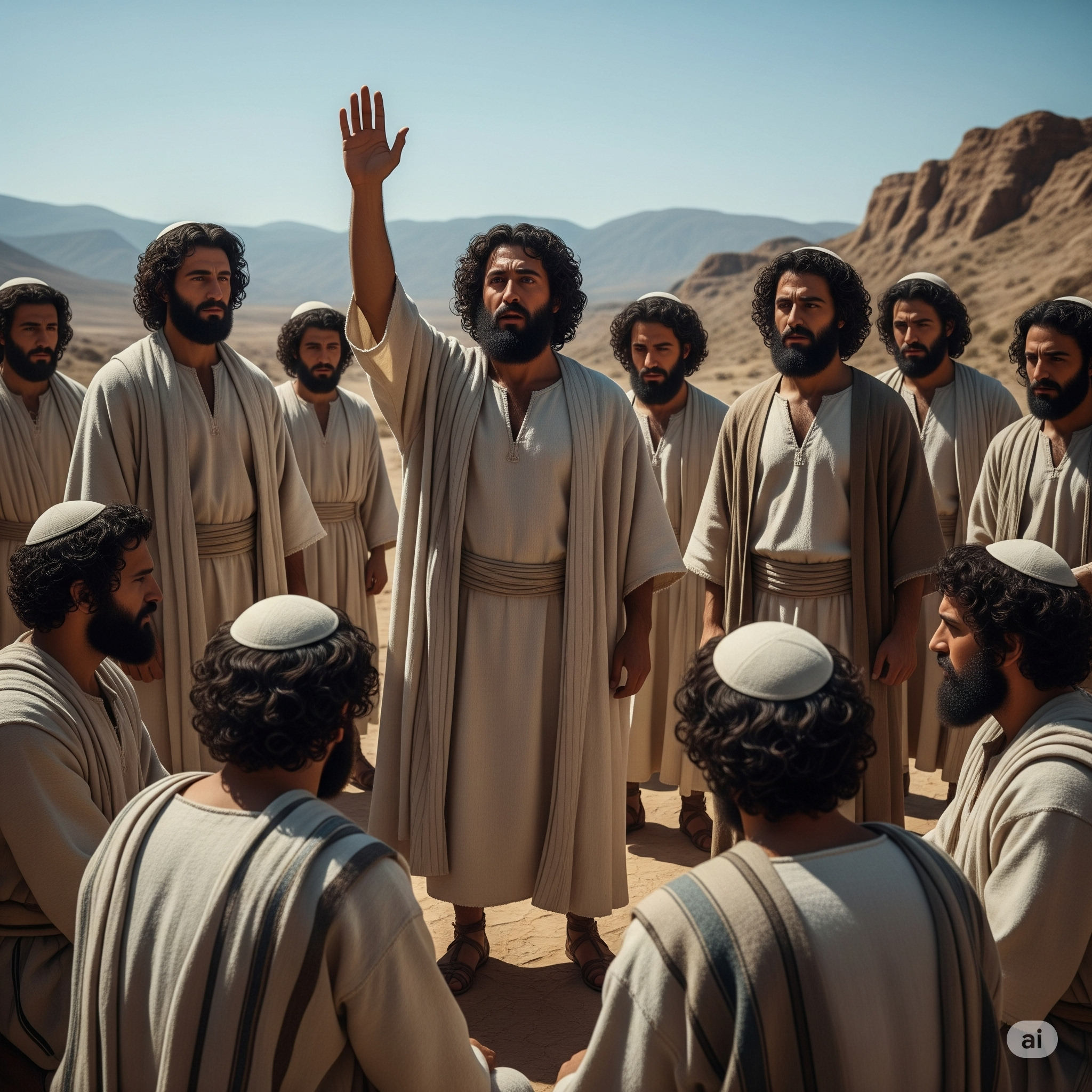
The Community Rule (1QS), a foundational document outlining the regulations and practices of the Yachad community, provides the most explicit evidence for Shavuot as a time of oaths. 1QS does not explicitly name “Shavuot” when describing the annual ceremony of covenant renewal. This annual gathering served as the primary occasion for members to reaffirm their unwavering commitment to God’s covenant and His ordinances.
The ceremony described in 1QS is a carefully ordered affair, involving the priests, the Levites, and the entire congregation. At its center lies the communal affirmation of the covenant, originally sealed by a binding oath for each new member (cf. 1QS I, 16–18). However, the covenantal commitment was not static. According to 1QS II 19, the community would conduct an annual review of its members’ conduct to ensure continued fidelity:
“…וככה יעשו שנה בשנה כל ימי ממשלת בליעל…”
“…And thus they shall do year by year, all the days of Belial’s dominion…”
This statement does not refer to the initial oath itself, but rather to a regular communal examination in which members’ adherence to the covenantal statutes was evaluated. This process served to reassert the authority and relevance of the original oath, ensuring that the obligations it imposed remained active and binding. The clause “all the days of Belial’s dominion” indicates that this practice was intended to continue throughout the present age of corruption and spiritual conflict. Those found in breach of the covenant were subject to discipline, including public rebuke or expulsion, demonstrating the community’s deep commitment to ongoing purity and loyalty. This annual reaffirmation underscores the Qumran sect’s rigorous approach to communal integrity and covenantal life.
The oath signifies a solemn and binding commitment. The text in 1QS II 18–20 emphasizes that all who wish to enter the covenant must swear “to do according to all that He commanded, according to the Torah which He commanded through the hand of Moses.” This indicates not merely general piety, but specific adherence to the Mosaic Torah as interpreted and applied by the community. Importantly, this oath was not a one-time declaration, but part of a broader cycle of annual covenant renewal, designed to ensure ongoing purity, loyalty, and conformity to the group’s standards. Those who transgressed or displayed disloyalty faced censure or expulsion, underscoring the rigorous and uncompromising nature of these commitments. This practice highlights the Qumran community’s dedication to a disciplined, covenantal life, continually reaffirmed through solemn oaths.
3.2. The Influence of the Book of Jubilees
The Book of Jubilees, found among the Dead Sea Scrolls, exerted considerable influence on the Qumran community’s theological outlook. Jubilees explicitly links Shavuot not only to the initial giving of the Torah at Mount Sinai but also portrays it as a day of covenant renewal dating back to primeval figures such as Noah. This strong theological connection of Shavuot to the original covenant at Sinai reinforced the Qumran community’s practice of using this festival for annual covenant renewal.
Jubilees 6:17-18 is particularly illuminating:
“כי כן חקוק וכתוב על לוחות השמים כי יהיו עושים את חג השבועות בחודש הזה אחת בשנה לחדש את הברית בכול שנה בשנה.”
“For thus it is ordained and written on the heavenly tablets: to observe the Feast of Weeks in this month once per year, to renew the covenant each and every year.”
(Jubilees 6:17–19)
This passage presents a multi-dimensional understanding of Shavuot. While rooted in the agricultural cycle as the Feast of the Firstfruits of the wheat harvest, its deeper theological meaning is as a the Festival of the Covenant. The Book of Jubilees links this covenant not merely to Sinai, but also to the covenant made with Noah and his sons, thus extending the scope of Shavuot beyond Israel to all humanity.
By emphasizing that this covenant renewal is ordained on the heavenly tablets and must occur every year, Jubilees establishes Shavuot as an eternal and cosmically mandated event.
This strong covenantal emphasis undoubtedly shaped the Qumran community’s practice of conducting annual covenant renewal ceremonies, which included the reading of statutes and the reaffirmation of allegiance to the Torah and communal regulations (cf. 1QS II 18–19). For the sectarians, Shavuot provided a divinely appointed framework for recommitting themselves to the eternal covenant. Seeing themselves as the true remnant and heirs of that covenant, they made Shavuot the natural and essential occasion for their collective reaffirmation through solemn oaths and communal judgment.
3.3. Calendrical Precision and Fixed Dates- An Interpretation
For the Qumran community, the 364-day solar calendar was more than a matter of chronology—it was a sacred architecture of time. By adhering to this calendar, the sect believed they were aligning themselves with the divine will,restoring order in a world that had become spiritually and ritually disordered. This worldview is embedded in multiple texts from the Dead Sea Scrolls, especially the calendrical documents (e.g., 4Q319–4Q330), priestly courses, and liturgical schedules, which depict time not as neutral, but as sanctified and measurable according to heavenly design.
The calendar functioned as a covenantal map, one that placed each individual and ritual act within a cosmic rhythm governed by divine law. To live according to this calendar was to reject the authority of the mainstream priesthood, whom the sect saw as corrupted by Babylonian and Hellenistic influences. It was also to reclaim the lost sanctity of the priestly past, restoring what they understood as the original, pre-exilic order of Israelite worship.
In this framework, the fixed timing of Shavuot—always falling on the 15th day of the third month, always on a Sunday—takes on profound importance. The unchanging nature of the festival reflects the immutability of the divine covenant.Shavuot, marking the giving of divine instruction (Torah) and possibly linked in Qumran theology to cosmic creation and renewal, becomes the perfect time for ritual reaffirmation. Even when not explicitly labeled an “oath ceremony” in the extant scrolls, Shavuot’s position as a temporal high point in the calendar marks it as a natural locus for recommitment.
Moreover, this calendrical structure imposed communal discipline. The synchronization of life around fixed festivals meant that individual behavior was constantly measured against the sacred cycle. The mishmarot texts, assigning priestly families to weekly temple service, underscore the community’s belief that sacred service and timekeeping were inseparable. Just as each priestly division had a fixed place in the yearly rhythm, so too did each member of the community have a role in maintaining the spiritual purity and order that the calendar demanded.
Thus, the calendar was not a passive framework, but aperformative act of covenant. Observing it was itself a form of obedience and a statement of fidelity to God’s true order. Those who deviated from it were not simply incorrect in calculation—they were in rebellion against heaven’s law.
In this way, the Qumran calendar served as both cosmic clock and communal constitution. Its precision enabled the community to:
- Predict and structure all festivals, sacrifices, and rituals;
- Anchor collective memory and religious renewal to fixed moments;
- Establish a disciplinary system where individual and collective life were evaluated according to divine time.
The yearly rhythm thus culminated in events like Shavuot, where the alignment of cosmic time, ritual performance, and communal reaffirmation became an act of spiritual resistance and sacred renewal. The calendar did not merely reflect their theology—it was the instrument through which their theology was enacted.
4. Conclusion
The Dead Sea Scrolls reveal a distinctive and profound understanding of Shavuot within the Qumran community. Far from being solely an agricultural celebration, Shavuot served as a pivotal annual occasion for the swearing of solemn oaths and the rigorous renewal of the covenant with God. The Community Rule (1QS) explicitly details the annual covenant renewal ceremony, which scholarly consensus identifies with Shavuot, wherein members pledged absolute loyalty and obedience to the community’s interpretation of divine law. The textual evidence, and the annual nature of the covenant reaffirmation, underscores the central role of vows on this occasion.
This practice was further bolstered by the theological traditions found in the Book of Jubilees, which identified Shavuot as a feast of covenant and linked it to primordial covenants and the giving of the Torah at Sinai. This robust theological framework provided the justification for Shavuot as the ideal time for the Qumran community’s covenantal renewals. Moreover, the fixed nature of Shavuot in the Qumran’s unique 364-day solar calendar facilitated its consistent observance as a day of covenantal affirmation, making it a predictable and central event in their liturgical year. For the Qumran community, Shavuot was thus transformed into a solemn spiritual milestone, epitomising their unique brand of disciplined piety and their unwavering commitment to living under the strictures of their covenant with God.
Bibliography
Ben-Dov, Jonathan.“Astronomy and Calendars at Qumran.” In Handbook of Archaeoastronomy and Ethnoastronomy, edited by Clive Ruggles, 1019–1032. New York: Springer, 2015.
Jacobus, Helen R. Function and Creativity in the Hebrew, Aramaic and Cryptic Calendars from Qumran. STDJ 130. Leiden: Brill, 2020.
VanderKam, J. C. Calendars in the Dead Sea Scrolls: Measuring Time at Qumran. Routledge, 1998.
Wise M., Abegg M., Jr., Cook E.A New Translation The Dead Sea Scrolls. New York, 2005.
Werman, M. The Book of Jubilees, Introduction, Translation and Interpretation. Jerusalem, 2015 (Hebrew).
